Best Mouse for Big Hands: The Fit Guide Most Reviews Skip
Most guides about the best mouse for big hands hand you a list of the same products with the same specs. Length: 128mm. Weight: 40-50g. Done. But if you have spent time with a mouse that ticks all those boxes and still felt wrong after two hours, you know the list approach misses something. The right mouse for big hands is not the longest or the lightest. It is the one whose geometry matches how your hand actually rests, moves, and applies pressure over a long session. This guide explains what to measure, what to look for in a shell, and why rear hump height is the most overlooked spec in the whole decision.
Measure Your Hand Before You Look at Products
The two numbers that actually matter
Most advice stops at palm length: measure from your wrist crease to the tip of your middle finger. Hands at 19cm or longer are generally in large territory. But knuckle width matters just as much. Measure across your knuckles at their widest point. If that number reaches 10cm or above, you need a shell with enough rear width to let your hand settle without squeezing the grip sides. A 20cm palm with narrow knuckles has different needs than a 19cm palm with 11cm knuckle width. A tool like the EloShapes shape comparison database lets you filter mice by exact dimensions rather than vague size labels.
What a bad fit looks like after sixty minutes
Short sessions mask fit problems. A shell that is too narrow feels fine for twenty minutes. After sixty, you notice tension in the lower palm and the ring finger. The pinky floats off the edge. The thumb feels like it is pinching rather than resting. These are not preference issues. They are the physical result of a shell forcing your hand into a non-neutral posture. If those signals appear consistently at the one-hour mark, the mouse is too narrow regardless of its listed dimensions.
Why Shell Geometry Beats Specs for the Best Mouse for Big Hands
Rear hump height is the number most pages skip
The rear hump supports the heel of the palm and keeps the wrist neutral. For large hands in a palm grip, a hump height below 38mm creates a flattened hold that pressures the wrist tendons over extended sessions. That is where neutral posture collapses into pronation. Most product pages list length, weight, and sensor. Rear hump height rarely appears. Check the full spec sheet and cross-reference with independent shape data before buying. A mouse can hit a competitive weight while still providing the shell volume big hands need, as long as the geometry was designed for it rather than achieved by shrinking the frame.
Right-handed ergonomic versus ambidextrous shapes
Ambidextrous shapes compromise on both sides. The rear hump centers the palm, the thumb lands on a flat wall, and the body does not match the natural resting angle of the right hand. A right-handed ergonomic shell angles the whole design to match that posture. The thumb gets a contoured shelf. The right side flares to support the palm. That difference is minor at twenty minutes and significant at two hours.
How Grip Style Changes What You Need from a Big Hands Mouse
Palm grip and where most lightweight shells fall short
 Palm grip places the full hand in contact with the shell. For big-handed palm grip players, the rear of the shell needs enough flare to support the heel of the palm without the hand overhanging the back edge. Competitive shells built for speed and low weight are often too short and too flat for this. A mouse can weigh 49g and still support palm grip properly, but only if the geometry was designed for hand volume rather than trimmed down from a larger frame.
Claw and fingertip grip with larger hands
Claw grip with large hands works best when the rear hump gives the palm firm contact even with the fingers arched. Without that contact point, the grip destabilizes during fast lateral movements. Fingertip grip is more tolerant of different shell sizes but still needs a minimum length of around 125mm to stop the rear edge from sliding under the heel of the hand during acceleration. If the back of the mouse disappears under your palm mid-swipe, the shell is too short regardless of grip style.
Long Sessions Are Where the Best Mouse for Big Hands Actually Proves Itself
The spec sheet will not tell you how a mouse feels at the three-hour mark. That is where grip coating, skate quality, and shell geometry converge. A grippy matte finish keeps the hand from making constant microadjustments to maintain hold, reducing cumulative fatigue in the fingers and forearm. According to research on gaming mouse ergonomics, for sessions longer than two hours, shell size and posture support consistently matter more than raw weight.
One player in our community, gaming with hands measuring 19.5 by 13cm, spent years working through ergo options that were either too narrow for extended sessions or too heavy for competitive play. After finding a shell that matched both their palm length and knuckle width, they logged a seven-hour session with zero discomfort. That outcome is not a marketing claim. It is what correct fit actually delivers.
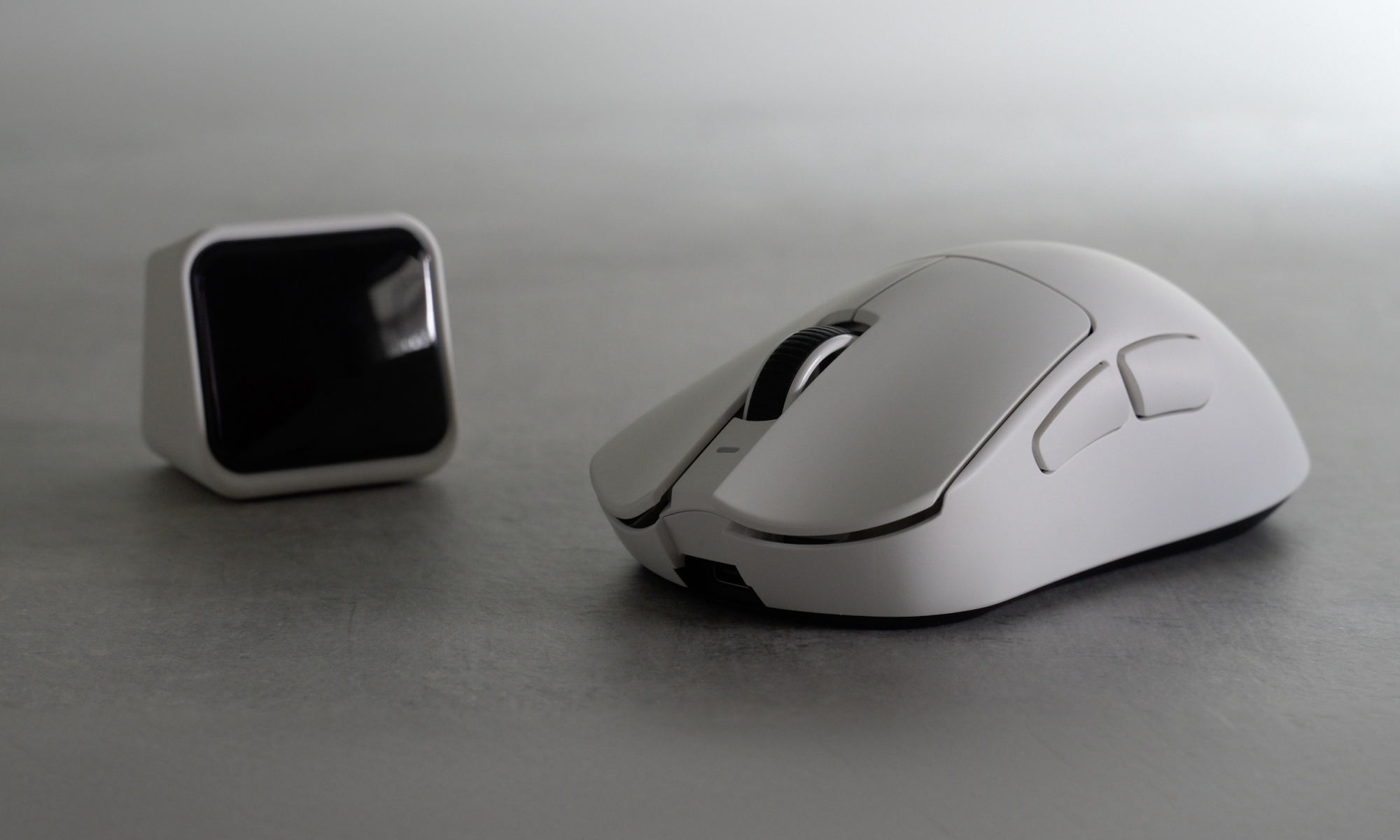
 The Terra PRO was designed around this problem: a right-handed ergonomic shell with a pronounced rear hump, an ultra-grippy matte coating, and a 49g weight that does not sacrifice shell volume to hit that number. The TechPowerUp shape and performance review has the full independent breakdown. If you have wide palms and want a lightweight ergo shell that holds up past the two-hour mark, it is the honest answer.
Three Things to Check Before You Buy
Before committing to any mouse, confirm shell length, rear hump height, and rear shell width at the palm contact point rather than the listed maximum width. Most pages report the widest front measurement. The width where your palm actually rests is the number that determines fit for large-handed players.
If you have a return window, test in your actual grip under light load. Hold the mouse as if tracking a target and hold that posture for five minutes. Tension in the base of the palm or the ring finger inside that window means the geometry is wrong, regardless of the specs on paper. A shell that requires active effort to hold is already failing you before the session starts.
What to Take Away When Choosing the Best Mouse for Big Hands
Rear hump height, shell width at the palm, and right-handed ergonomic shaping determine whether a mouse holds up over a long session for big-handed players. Measure your palm length and knuckle width before looking at product pages. Prioritize shell geometry over raw weight. Test under real grip conditions rather than a flat hand rest on a display unit.
Get the geometry right and a long session stops being something you manage.